
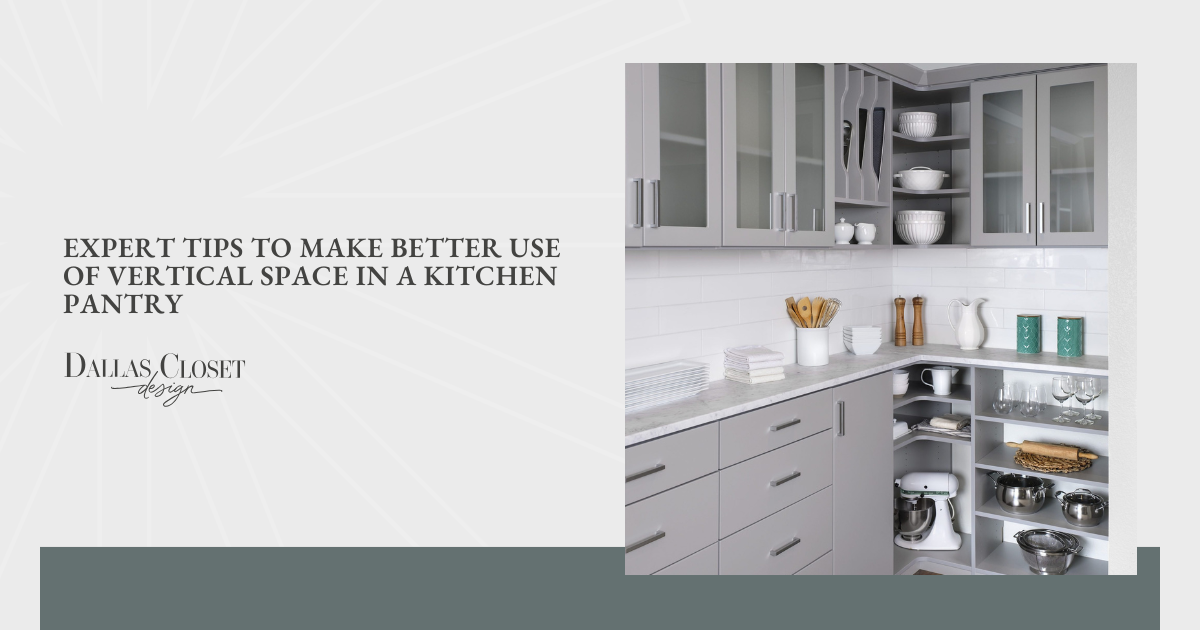
You open your kitchen pantry door expecting order, and instead, you're staring at a wall of clutter that somehow keeps building no matter how often you tidy it. Chances are, the problem isn't your pantry's size. It's the space above eye level that you've never really put to work. Shelves stop a few feet short of the ceiling, and that gap quietly swallows storage you could actually be using.
Wasted height doesn't have to stay that way. You can reclaim it with a few smart upgrades that work with your pantry's existing layout instead of fighting it. In my experience, changes that use height, not floor space, make the biggest difference in how a pantry feels. Some upgrades are quick weekend additions, while others involve a bit more planning, but all of them leave your pantry holding more and looking sharper without expanding its footprint.
These strategies show you practical ways to maximize every inch of a kitchen pantry's vertical space:
- Install floor-to-ceiling shelving
- Add a pull-out pantry tower or cabinet
- Add adjustable shelving and modular components
- Incorporate stacking bins and labeled containers
- Use under-shelf baskets and hooks
- Use the back of the pantry door
- Hang wire or wall-mounted racks for awkward items
- Add a rolling ladder or step stool storage
You'll find a mix of quick wins and bigger upgrades ahead, so start wherever your kitchen pantry needs the most help.
Install Floor-to-Ceiling Shelving
Most kitchen pantry shelves stop well below the ceiling, leaving a strip of wall space that never gets used for anything but dust. Extending shelving all the way up changes that instantly. You gain one or two extra rows of storage without touching the pantry's footprint, and that extra space adds up fast for anyone who stocks bulk items or keeps a deep pantry.
The top shelves don't need to hold things you reach for every day. Save them for seasonal items, bulk purchases, or small appliances that only come out a few times a year. Everyday staples stay at eye level and below, right where you want them, while the upper shelves quietly absorb the overflow that used to end up stacked on the counter.
Full-height shelving also gives your kitchen pantry a more finished look. Gaps near the ceiling tend to read as unfinished or awkward, especially in a smaller pantry where every wall matters. Shelves that run edge to edge make the whole space look intentional instead of pieced together. It's a small change that makes the room feel considered rather than assembled on the fly.
If you're building this out yourself, plan for adjustable brackets so you can shift shelf spacing later as your storage needs change. A fixed layout might work well now, but flexibility saves you from redoing the whole system down the road. It also means you won't need to pull everything apart if you switch from bins to baskets or add a small appliance that needs a taller shelf. Planning ahead here saves you a bigger headache later.
Add a Pull-Out Pantry Tower or Cabinet
Six inches of empty space beside the fridge doesn't look like much, but it's often enough to hold an entire column of storage most kitchens never use. A pull-out pantry tower turns that overlooked gap into a functional part of your kitchen pantry. It slides out on rails, putting everything inside within easy reach, including items stored near the top.
I've seen these units make the biggest difference in kitchens where the pantry itself is small or missing altogether. Canned goods, spice jars, and bottles fit well on the narrow shelves, and nothing gets buried behind something else the way it can on a deep, fixed shelf. Everything stays visible from the front, which cuts down on buying duplicates of things you already have tucked away.
Height is where a pull-out tower really earns its place in this conversation. Built floor to ceiling, it uses vertical space that a standard cabinet never touches, and it does it in a footprint most kitchens can spare. The result is storage capacity that rivals a much larger pantry section, without giving up any usable floor space elsewhere.
Getting the fit right takes more planning than open shelving, since the unit needs to match its gap precisely and often calls for professional measuring and installation. The upfront work pays off in a feature that looks built-in rather than added on. Once it's in place, you'll likely find it becomes one of the most-used spots in the kitchen.
Add Adjustable Shelving and Modular Components
Every kitchen pantry ends up with an awkward mix of tall bottles, short spice jars, and boxes that never quite fit the gap they're given. Fixed shelving can't account for any of that. It locks you into whatever spacing the original installer chose, which rarely lines up with what you're actually storing. Adjustable shelving fixes the mismatch by letting you move each shelf up or down until the spacing matches your household.
Modular add-ons push that flexibility further. Baskets, dividers, and slide-out trays attach, move, or come out entirely as your needs shift, so the system adapts to how you actually shop and cook. A pantry stocked mostly with canned goods one year can shift to bulk staples and bins the next without any structural rework.
Grocery habits change throughout the year more than most people notice. Holiday baking supplies pile in during the fall, warehouse bulk buys take over in the spring, and produce storage needs shift with the seasons. A rigid shelving system struggles to keep up with any of that, while adjustable components let your kitchen pantry flex right along with it.
When you're shopping for a system, look for tracks spaced every inch or two, which keeps adjustments precise. Tighter increments mean fewer wasted gaps between shelves. This precision is what separates a pantry that feels tailored to your household from one that just happens to have shelves in it.
Incorporate Stacking Bins and Labeled Containers
A single shelf in your kitchen pantry can hold two or three times what it currently does, and the trick has nothing to do with adding more shelves. Stacking bins let you build upward within the space you already have, turning one flat surface into multiple storage layers. Snack packets, canned goods, and boxed items all stack cleanly instead of spreading out across the shelf in a single layer with wasted air above them.
Labels matter just as much as the bins themselves. Without them, stacked containers turn into a guessing game, and you end up pulling down three bins just to find the one you need. A clear label on each container means you can identify contents at a glance, even when a bin sits on a shelf well above eye level.
This combination solves a problem that plagues a lot of pantries: shelves that are technically full but still feel disorganized. Loose bags and boxes shift, tip over, and create gaps that go unused. Uniform, labeled bins stack securely and put every inch of shelf height to work for you. The whole shelf ends up looking as organized as it actually is.
Choose bins with a consistent footprint so they stack evenly without wobbling. Clear or lightly frosted containers work best since you can often see contents even before checking the label. Sticking with one or two bin sizes across the whole pantry also keeps the stacks looking uniform. You'll save time every single day you reach for something in your kitchen pantry.
Use Under-Shelf Baskets and Hooks
The gap between a shelf and whatever sits on top of it usually goes untouched, even though it's often several inches of clear vertical space. Under-shelf baskets slide onto the shelf's lip and hang down into that gap, adding an entire tier of storage without giving up any of the shelf above. Small items like packets, bagged snacks, or foil rolls fit neatly into these baskets instead of sliding around loose on a shelf meant for bigger things.
Hooks work the same way for items that don't stack or bag well. Measuring cups, small utensils, or reusable bags can hang from a hook mounted directly under a shelf, keeping them out of the way of boxed and canned goods. Your kitchen pantry ends up with a use for space that would otherwise sit empty between one shelf and the next.
This upgrade works especially well in pantries that already feel full, since it doesn't require removing or replacing anything already installed. You're adding capacity to shelving you already have rather than reworking the whole system. It's one of the simplest ways to squeeze more function out of a pantry that seems maxed out.
Look for baskets and hooks that clip on without screws or drilling, since most slide right onto standard shelf lips. You can rearrange or remove them later if your storage needs change. Most hardware stores and organization retailers carry several sizes, so you can match them to whatever shelf depth you're working with. It's a low-commitment upgrade that still makes a real difference in how much your pantry can hold.
Use the Back of the Pantry Door
Swinging a pantry door open reveals a flat surface that almost never gets used for anything beyond hanging a broom. Door-mounted racks change that by turning the door itself into a shallow storage zone, adding capacity without touching a single shelf inside. Spice jars, small condiment bottles, and snack packets all fit well on these racks, since the shallow depth keeps items from blocking the door's swing.
Hooks serve a similar purpose for items that don't sit well on a rack. Measuring spoons, oven mitts, or small cleaning tools can hang directly from the door, keeping them close at hand without competing for shelf space. Your kitchen pantry gains a functional zone that would otherwise sit completely unused.
I like this option for households that go through spices or snacks quickly, since everything on the door stays visible and easy to grab. Nothing gets buried behind taller items the way it might on a standard shelf. Kids especially benefit from door storage, since lower rack tiers put snacks within easy reach without an adult needing to pull anything down.
Weight matters here more than with most other upgrades. Overloading a door rack can strain the hinges or cause the door to sag over time, so stick to lightweight items and check the rack's stated capacity before loading it up. Done right, this upgrade adds meaningful storage in a spot most kitchens completely overlook.
Hang Wire or Wall-Mounted Racks for Awkward Items
Cutting boards, baking sheets, and trays share one frustrating trait: They're too flat to stack with anything else and too wide to slide in beside jars or boxes. A dedicated wire or wall-mounted rack gives these items a vertical spot of their own, usually on a side wall or the back wall of your pantry. Instead of leaning loosely against other items or hogging an entire shelf, they stand upright in a narrow footprint.
This approach works well for anything flat and awkward to store, not just bakeware. Cooling racks, cutting boards, and even large serving platters all fit the same vertical storage logic. Once these items have a fixed spot, they stop sliding around or falling over every time you reach past them for something else.
Wall-mounted racks also make a kitchen pantry feel more organized at a glance. Items that used to create visual clutter, stacked unevenly or leaned in corners, now sit in a clean, upright row. That small shift in appearance often makes the whole pantry feel more put together, even if nothing else has changed.
Mounting these racks requires anchoring into wall studs or using appropriate drywall anchors, since loaded racks carry real weight. Spacing them a few inches from any shelving keeps items from catching on shelf edges when you pull them out. Careful installation keeps the whole setup secure for years of daily use.
Add a Rolling Ladder or Step Stool Storage
Every upgrade so far assumes you can actually reach the space being used, and that assumption breaks down once shelves climb toward the ceiling. I've watched plenty of top shelves turn into storage people avoid, even when they hold exactly what's needed, simply because nothing's there to help you reach them. A rolling ladder or dedicated step stool storage solves that access problem directly.
The rolling ladder option works best in larger kitchen pantries with enough floor clearance for it to glide along a wall-mounted track. It tucks neatly against the shelving when not in use and takes only seconds to pull out. A folding step stool stored on a low shelf or hook works just as well in smaller pantries where a full ladder track isn't practical.
Pantries with a ladder or stool tend to get used more evenly from top to bottom. Without easy access, people load the bottom shelves and let the top ones sit half-empty or packed with things nobody wants to climb for. A simple stool changes that habit almost immediately, since reaching the top shelf takes no more effort than reaching the middle one.
Choose a stool or ladder rated for the weight it needs to support, and store it somewhere it won't block the pantry's main walkway. Check that rating periodically, especially if the stool sees daily use over several years. This last piece ties every other upgrade together, since none of the added vertical storage does much good if it's too much trouble to reach.
Conclusion
Vertical space in a kitchen pantry rewards even small changes, and you don't need a full remodel to see the difference. A pantry that once felt cramped can hold twice as much once every wall, shelf gap, and door surface gets put to work. The best results come from combining a few of these upgrades rather than picking just one, since height, depth, and access all play a part in how a pantry actually functions. Once you start seeing your pantry's height as usable space, it's hard to look at an underused shelf the same way again.