
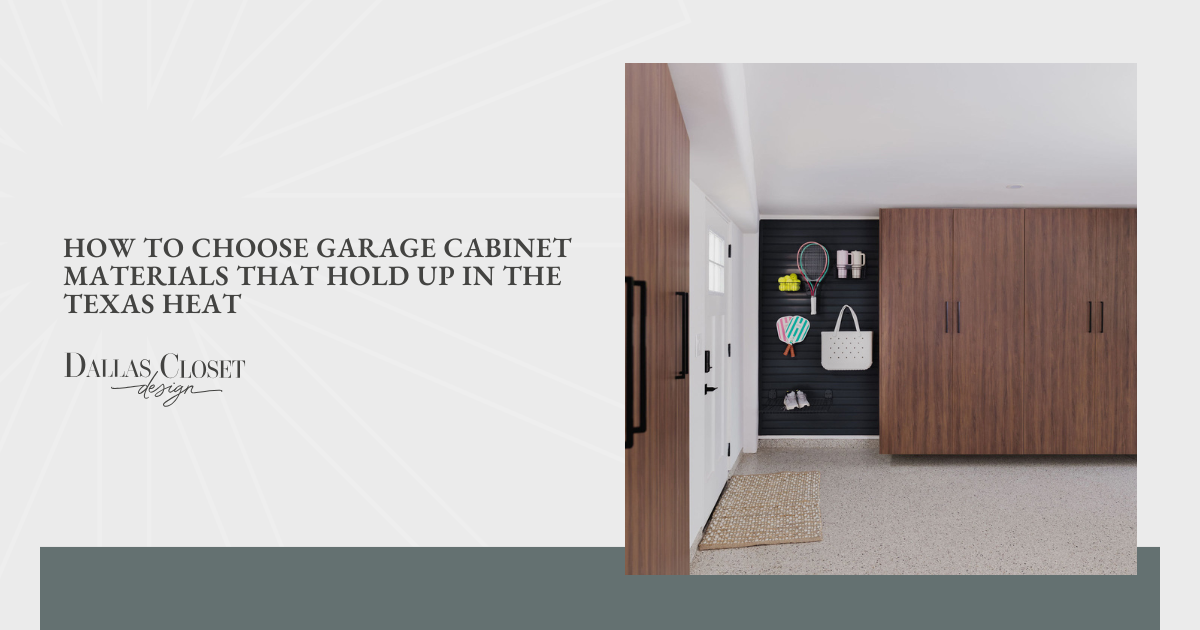
Choosing garage cabinets in Texas isn't the same as choosing them anywhere else. The intense summer heat, prolonged sun exposure, and unpredictable humidity swings put materials through conditions most manufacturers don't design for. A cabinet that looks great in a showroom can warp, fade, or weaken after just one Texas summer. Knowing what to look for before you invest is the first step to getting it right.
The market is full of garage cabinet options, and most of them look equally convincing in a catalog or online listing. The specs that matter most, like material density, finish type, and hardware quality, rarely make it to the front of a product description. In my experience, cabinets marketed as heavy-duty storage solutions can start to bow and peel after a single hot Texas summer simply because heat tolerance was never part of the design. A closer look at those specs, rather than the surface appeal, is what helps you avoid a costly mistake.
These are the key factors to evaluate when shopping for garage cabinets built for the Texas heat:
- Select a material that matches your garage's conditions
- Know what makes engineered wood garage-ready
- Look for UV-resistant finishes and coatings
- Check for moisture and humidity ratings
- Choose hardware that won't corrode in extreme conditions
- Consider ventilation when selecting cabinet designs
Each of these factors plays a specific role in how well your cabinets hold up in a hot Texas garage. Understanding all of them gives you a much clearer picture of what to prioritize when you shop.
Select a Material That Matches Your Garage's Conditions
No single cabinet material works best for every garage in Texas. A space that gets direct afternoon sun through a west-facing door puts materials under a very different kind of stress than a shaded, well-ventilated garage attached to an air-conditioned home. Before settling on a material, take an honest look at your garage's layout, sun exposure, and how much temperature fluctuation it experiences throughout the day.
Steel is a strong performer in high-heat environments because it resists warping and holds its structure even when temperatures spike. It's a practical choice for garages with heavy sun exposure or poor ventilation, especially when the priority is durability over aesthetics. That said, steel can radiate heat and may not suit every storage need, so it works best when paired with thoughtful cabinet placement.
Engineered wood products, when properly treated and sealed, perform reliably in garages with moderate sun exposure and adequate airflow. They offer more design flexibility and tend to blend well with spaces that double as workshops or hobby areas. Matching the material to your garage's actual conditions, rather than defaulting to the most popular option, is the most practical way to get storage that holds up for years.
Know What Makes Engineered Wood Garage-Ready
Engineered wood is a broad category, and not everything that falls under it is built to handle a Texas garage. Standard MDF and particleboard absorb moisture readily and can swell, soften, or break down when exposed to heat and humidity over time. The difference between a cabinet that lasts and one that doesn't often comes down to how the wood is manufactured, treated, and finished before it ever reaches your garage.
Moisture-resistant ratings are one of the most important specs to look for when evaluating engineered wood cabinets. Products with a higher-density core are less porous and better equipped to handle the humidity fluctuations common in Texas garages. Sealed edges and surfaces also play a big role since exposed edges are where moisture tends to work its way in first.
Edge banding is another detail worth paying attention to. It's a thin material applied to the exposed edges of cabinet panels to protect them from moisture, heat, and general wear. Cabinets with high-quality edge banding and fully sealed surfaces are far better equipped to handle the demands of a hot Texas garage than those without it. A quick conversation with your cabinet provider about these specs before you buy can save you from a lot of frustration down the road.
Look for UV-Resistant Finishes and Coatings
The finish on your garage cabinets does a lot more work than most people realize. In a Texas garage, surfaces are routinely exposed to intense sunlight, and without adequate UV protection, that exposure adds up quickly. Finishes that aren't rated for UV resistance tend to fade, chalk, or crack well before the cabinet structure itself gives out.
When I evaluate cabinet finishes, the first thing I look for is whether the coating is specifically formulated for high-heat or outdoor-adjacent environments. Powder-coated finishes on steel cabinets offer strong UV resistance and hold their color well under prolonged sun exposure. For engineered wood cabinets, a high-quality laminate or thermofoil finish with UV inhibitors provides a similar layer of protection against sun damage.
It's also worth asking how the finish holds up under thermal expansion. Cabinets in a hot garage expand and contract with temperature changes, and a finish that can't flex with the material will eventually crack or peel at the seams. A finish rated for temperature fluctuation is just as important as one rated for UV exposure, and the best cabinet options account for both.
Check for Moisture and Humidity Ratings
Texas heat rarely travels alone. High humidity is a constant companion, especially during the summer months, and it creates a separate set of challenges for garage cabinets that heat alone doesn't account for. A cabinet that handles high temperatures well can still deteriorate quickly if it isn't built to manage moisture.
Moisture resistance is a measurable spec, not just a marketing claim, and it's worth verifying before you commit to a purchase. For engineered wood products, look for cabinets that meet an interior moisture-resistant standard at minimum, with higher-rated options being more appropriate for garages with poor airflow or known humidity issues. Steel cabinets should have a corrosion-resistant coating or finish to prevent rust from taking hold in humid conditions.
Humidity also tends to concentrate in specific areas of a garage, particularly near doors, windows, and low-lying corners. Placing cabinets in these zones without accounting for moisture exposure is one of the more common reasons cabinets fail prematurely. Checking the moisture and humidity ratings of your cabinets and factoring in where they'll be installed gives you a much more complete picture of how well they'll hold up.
Choose Hardware That Won't Corrode in Extreme Conditions
Cabinet hardware is easy to overlook when you're focused on material and finish, but it's often the first thing to fail in a hot, humid Texas garage. Hinges, handles, and drawer slides are all exposed to the same heat and moisture as the cabinet itself, and lower-quality metal hardware can rust, seize, or weaken well before the cabinet body shows any signs of wear. What holds your cabinets together and keeps them functional day to day deserves just as much scrutiny as the material they're made from.
Stainless steel and zinc-alloy hardware are two of the more reliable options for garage environments. Both resist corrosion well and hold up under the kind of temperature swings Texas garages experience throughout the year. Drawer slides in particular are worth a close look since they have more moving parts and more surface area exposed to humidity than most other hardware components.
I've seen cabinets with solid construction undermined entirely by cheap hinges that rusted shut within a couple of seasons. It's a frustrating outcome that's easy to avoid by asking about hardware specs and coatings upfront. Corrosion-resistant hardware throughout the cabinet, not just on the most visible components, is a straightforward way to protect your investment.
Consider Ventilation When Selecting Cabinet Designs
Airflow is one of the most underestimated factors in garage cabinet performance. In a sealed or poorly ventilated cabinet, heat builds up and lingers, accelerating the breakdown of materials, finishes, and hardware from the inside out. Choosing a cabinet design that accounts for ventilation is just as important as choosing one made from the right material.
Cabinets with slatted doors, louvered panels, or open-back designs allow air to circulate more freely, which helps regulate the temperature inside the unit. This is especially relevant in garages that don't have ceiling fans, windows, or an HVAC connection, where heat has fewer ways to escape. Even a modest improvement in airflow can make a noticeable difference in how long your cabinets hold up.
Cabinet placement also plays a role in ventilation. Units pushed flush against a wall with no clearance on the sides or back can trap heat more easily than those with even a small gap for air movement. Both the cabinet design and its placement in your garage work together to give you the best shot at a setup that stays in good shape through even the hottest Texas summers.
Conclusion
Texas garages are demanding environments, and the cabinets that last in them are the ones chosen with that reality in mind. Material quality, finish durability, hardware strength, moisture resistance, and ventilation all factor into how well your garage cabinets perform over the years. Cutting corners on any one of them can compromise the rest. The details that seem minor during the shopping process are often what separate storage that holds up from storage that doesn't.